Quick answer: To start a bookkeeping business, learn the fundamentals, consider a certification for credibility, choose a niche, set up your business legally, pick cloud accounting software, price your services on a monthly retainer, and land your first clients through your network and referrals. Startup costs are low, often between $1,000 and $10,000, and you can run it from home. A solo bookkeeper can realistically manage $80,000 to $120,000 in annual revenue, making it one of the most accessible paths to owning a practice.
Here is the full step-by-step, plus the costs, certifications, pricing, and client-getting tactics that make it work.
Why start a bookkeeping business?
The demand is enormous and steady. There are tens of millions of small businesses, and most owners lack the time or skill to keep their own books.
That means clients will always exist. Bookkeeping is also a specialized skill, so you can charge specialized rates. And because it runs on software from a single computer, the barrier to entry is low while the income ceiling is high.
The trade-off: this is a trust business. You handle sensitive financial records, so reliability and accuracy are everything.
Step 1: Learn the fundamentals
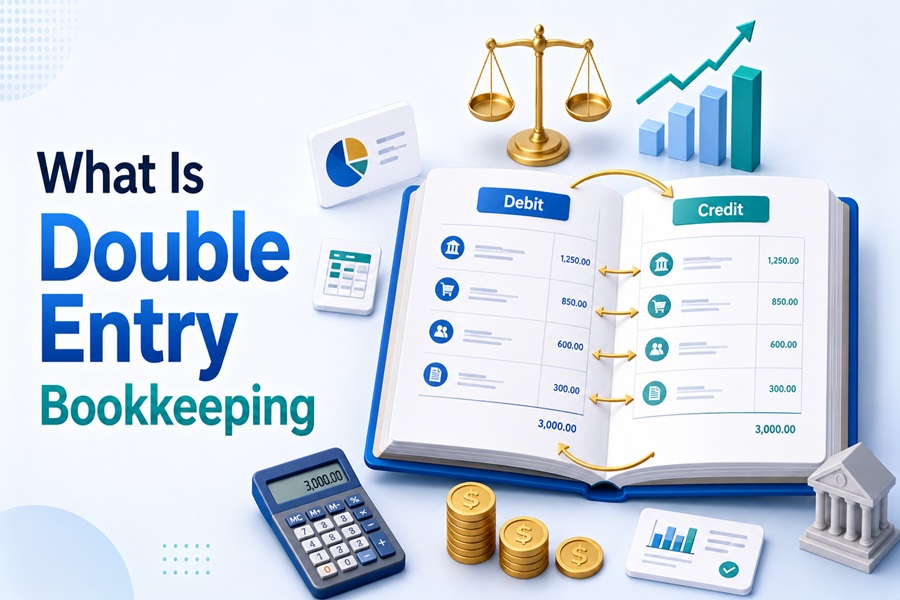
Before taking on clients, be solid on the basics: double entry bookkeeping, debits and credits, the accounting equation, and how financial statements come together.
You do not need a CPA or a degree. You do need genuine competence, because a mistake in a client’s books damages both them and your reputation.
Step 2: Consider a certification
Certification is not legally required, but it builds credibility fast, which matters most when you have no clients yet.
Here are the common options.
| Certification | Body | Notes |
|---|---|---|
| Certified Bookkeeper (CB) | AIPB | Widely recognized professional credential |
| Certified Public Bookkeeper (CPB) | NACPB | Exam around $80 to $100 for members or non-members |
| QuickBooks ProAdvisor | Intuit | Often free, proves software expertise |
| Xero Advisor | Xero | Free through the partner program |
Software certifications like QuickBooks ProAdvisor and Xero Advisor are frequently free and quick, and they signal to clients that you know their tools.
Step 3: Choose a niche
Specializing helps you stand out and narrows your workload. Instead of serving everyone, focus on an industry.
Popular niches include real estate, construction, restaurants, e-commerce, and professional services. A niche lets you learn one industry’s quirks deeply, build referral networks within it, and command better rates as the specialist.
Step 4: Set up your business legally
Get the foundation right so you operate legally and look professional.
- Choose a structure. Sole proprietorship, LLC, or corporation, based on your liability and tax preferences. Many bookkeepers choose an LLC for liability protection.
- Register the business. Pick a name and register it locally.
- Get licenses. There is no federal bookkeeping license in the US, but most states require a general business license. Check local rules.
- Get errors and omissions insurance. This protects you if a mistake causes a client loss. Expect a modest starting cost.
Step 5: Pick your software and tools
Your software is the engine of the business. Choose cloud-based tools so you can work virtually.
Core tools:
- Cloud accounting software such as QuickBooks Online or Xero.
- A secure system for exchanging documents and client data.
- A simple website to establish credibility, which you can build affordably yourself.
Pick tools that are efficient, scalable, and work well together.
Step 6: Set your pricing
How you price shapes your income and your stress. Two models dominate.
- Monthly retainer. A fixed monthly fee for ongoing work. This is the most popular model because it gives you predictable income and clients a predictable bill.
- Hourly. Charge for time spent. Simpler to start, but it caps your income and penalizes efficiency.
Retainers are usually the better long-term choice. Whatever you pick, write a clear client agreement that spells out exactly what each service includes and excludes.
Step 7: Land your first clients
This is the hardest part, because bookkeeping runs on trust and referrals. Owners are cautious about handing over their finances.
Proven ways to win early clients:
- Start with your network. Tell everyone you know what you now do.
- Target local businesses. Find nearby businesses that likely need help and reach out directly.
- Partner with accountants. CPAs often refer out bookkeeping work.
- Build a referral engine. Every satisfied client should become a source of the next one.
- Show credibility. Lead with your certification, clear service scope, and professionalism.
What does it cost to start?
Startup costs are refreshingly low, especially from home. Here is a realistic picture.
| Setup | Typical cost |
|---|---|
| Lean, from home with owned equipment | Under $1,000 to $2,000 |
| Standard setup with software and basic marketing | $2,000 to $5,000 |
| Built-out with certifications and polished branding | Up to $10,000 |
Most of these are one-time expenses. Once established, your ongoing overhead is low, which is part of what makes the model so attractive.
How much can a bookkeeping business make?
The income potential is strong for a low-cost business.
A solo bookkeeper can typically manage $80,000 to $120,000 in annual revenue before needing help. As you approach that range, it is time to consider your first hire, with a benchmark of each bookkeeper eventually managing a client portfolio worth over $100,000 to the firm.
For context, a retainer model with a dozen clients paying several hundred dollars a month each puts six-figure revenue within realistic reach, on startup costs under a used laptop’s price.
What mistakes should you avoid?
A few errors trip up new bookkeepers repeatedly.
- Skipping a final review. Build a checklist for every monthly close so you catch errors before the client does.
- Not separating business and personal finances. Ironic for a bookkeeper, but common, and it creates tax headaches.
- Ignoring continuing education. Tax rules and software features change. Stay current.
- Vague service scope. Undefined agreements lead to disputes. Spell out what is included.
What do bookkeepers say from experience?
Practitioner communities offer grounded advice for new owners.
- On Reddit, established bookkeepers stress that the first few clients are the hardest, and that referrals and a clear niche accelerate everything after that.
- On Quora, practitioners repeatedly recommend the retainer model over hourly, because it rewards efficiency and stabilizes income.
- On Medium, bookkeepers who scaled describe a review checklist and clear client agreements as the habits that protected their reputation and let them grow.
The shared theme: pick a niche, price on retainers, protect quality with a review process, and let referrals compound.
Frequently asked questions
Do I need a certification to start a bookkeeping business?
No, it is not legally required, but a certification like CB, CPB, QuickBooks ProAdvisor, or Xero Advisor builds credibility and helps win early clients.
How much does it cost to start?
Often between $1,000 and $10,000, depending on how lean or built-out your setup is. Many start from home for under $2,000.
Can I run a bookkeeping business from home?
Yes. Most bookkeepers work remotely using cloud software and secure tools, from a single computer.
How do I get my first clients?
Start with your network, target local businesses, partner with accountants, and build a referral engine. Lead with credibility, since bookkeeping runs on trust.
How much can I earn?
A solo bookkeeper can typically reach $80,000 to $120,000 in annual revenue, with six figures achievable through a retainer model.