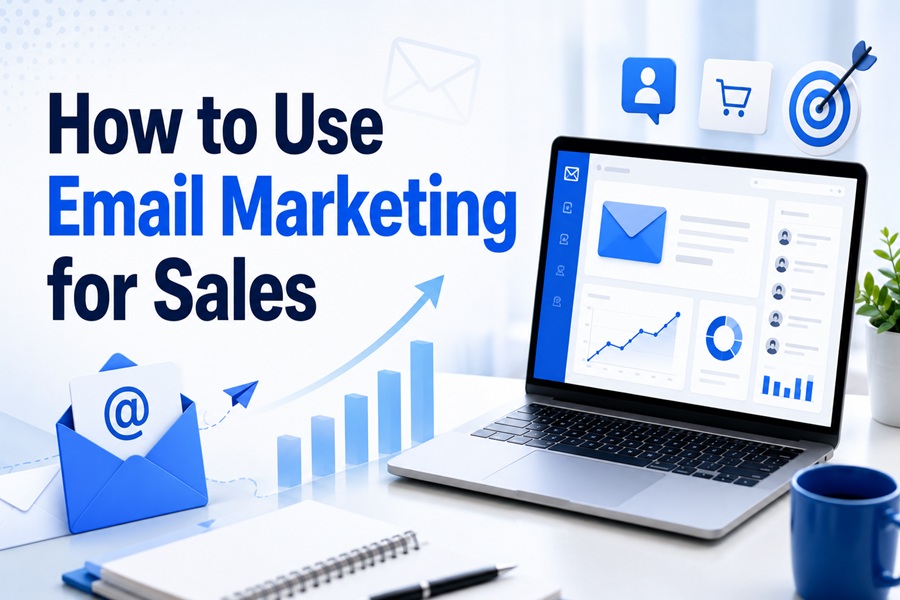
To use email marketing for sales, build a permission-based list, segment it by behavior and buyer stage, then automate the sequences that convert: welcome, abandoned cart, lead nurture, post-purchase, and re-engagement. Personalize with real data, test subject lines and offers, and track revenue-focused metrics rather than opens alone. Email works because your list is people who chose to hear from you, and you own it outright, unlike social followers.
The numbers back it up. Email returns roughly $36 to $42 for every dollar spent, and segmented, personalized campaigns can lift revenue by up to 760 percent over generic blasts. Here is how to capture that.
Why is email so effective for sales?
Two words: intent and ownership.
Your list is made of people who opted in. That single act separates email from cold ads and social posts aimed at strangers. They already raised their hand.
You also own the list. A social platform can change its algorithm or suspend your reach overnight. Your email list is yours. About 91 percent of consumers check email daily, and half of consumers say they have bought directly from an email, more than from social posts or ads.
Step 1: Build a permission-based list the right way
Sales start with a list of the right people, collected the right way.
- Use opt-in forms and lead magnets. Offer something worth an email address: a discount, a guide, a checklist, or a webinar seat.
- Use double opt-in. Confirming the subscription keeps your list clean and your deliverability high.
- Stay compliant. Anti-spam rules require genuine opt-in, a working unsubscribe link, and a physical business address on every email. Follow them.
- Never buy lists. Bought contacts do not convert and can wreck your sender reputation.
A smaller list of engaged, opted-in people beats a huge list of strangers every time.
Step 2: Segment your list for relevance
Sending everyone the same email is the fastest way to waste your list. Segmentation is where sales are won.
Segmented campaigns earn roughly double the click rates of non-segmented ones and are linked to major revenue lifts. Start by grouping subscribers by buying readiness.
| Segment | Who they are | What to send |
|---|---|---|
| Hot leads | Ready to buy now | A clear offer and a reason to act |
| Warm leads | Exploring options | Social proof, comparisons, case studies |
| Cold leads | Occasional or inactive | Re-engagement and value-first content |
| Cart abandoners | Almost bought | A reminder of the exact items |
| Window shoppers | Visited but never bought | A first-time offer |
| Recent buyers | Just purchased | Upsells, cross-sells, and reviews |
As your list grows, layer in more signals: purchase history, links clicked, and demographics. A link click on a specific topic signals intent, so you can trigger a tailored follow-up automatically.
Step 3: Automate the sequences that sell
Automated emails do the heavy lifting. They account for a small share of total email volume but drive a large share of email sales, because they reach people at the exact moment intent is highest.
These are the core sales sequences to set up.
| Sequence | Trigger | Goal |
|---|---|---|
| Welcome series | New subscriber | Introduce the brand, offer a first purchase incentive |
| Abandoned cart | Started checkout, did not finish | Recover the sale with a reminder |
| Abandoned browse | Viewed products, did not add to cart | Nudge with the items they viewed |
| Lead nurture | Downloaded a lead magnet | Build trust, move toward a first purchase |
| Post-purchase | Completed a purchase | Upsell, cross-sell, request a review |
| Re-engagement | Inactive for a set period | Win them back or clean the list |
Build these once and they generate sales while you sleep.
Step 4: Personalize beyond the first name
Personalized emails deliver several times more transactions than generic ones. Real personalization goes deeper than “Hi [First Name].”
High-impact tactics:
- Dynamic product recommendations based on past purchases or browsing.
- Behavior-triggered content that changes based on where someone is in the funnel.
- Personalized send times based on when each subscriber usually opens.
- Personalized subject lines, which can lift open rates by around a quarter.
Dynamic content is widely rated the single most effective personalization tactic, because relevance is what earns the click.
Step 5: Write emails that convert
The best automation fails with weak emails. A few rules make each one sell.
- One goal per email. One clear call to action beats five competing ones.
- Lead with the subscriber’s benefit, not your product features.
- Match urgency to the segment. Hot leads get a direct offer. Cold leads get value first.
- Make the call to action obvious. One button, clear wording, easy to tap on mobile.
- Add social proof for warm leads: reviews, results, and case studies.
Step 6: Test, measure, and optimize
Guessing leaves money on the table. Testing finds it.
Brands that regularly A/B test their emails achieve markedly higher ROI than those that never test. Test one variable at a time: subject line, offer, send time, or call to action.
Track revenue-focused metrics, not just opens:
- Conversion rate: the share of recipients who take the action you want.
- Revenue per email: what each send actually earns.
- Average order value from email traffic.
- Customer lifetime value influenced by email.
Open and click rates matter as early gates, but conversion and revenue tell you if email is truly driving sales.
What do experienced email marketers say?
Practitioner communities cut through the theory, and the patterns are consistent.
- On Reddit, small business owners repeatedly say the biggest mistake is overcomplicating the start. A simple welcome sequence and one clean offer outperform an elaborate funnel that never launches.
- On Quora, sellers stress that list quality beats list size. A small, engaged, opted-in list converts far better than a big cold one.
- On Medium, marketers who have sent millions of emails debunk the “send less” myth. Consistent, relevant sending builds the relationship. Silence kills it. The winners email regularly, segment well, and always give value before asking for the sale.
The shared lesson: start simple, keep the list clean and engaged, and stay consistent.
An insight most email guides skip
Two points rarely make the standard advice, and both drive real revenue.
Intent-based triggers beat calendar blasts. The highest-converting emails are not scheduled newsletters. They are triggered by behavior: a cart abandon, a browse, a link click. Reacting to what someone just did converts far better than broadcasting to everyone on a Tuesday.
You own this channel, so protect it. Deliverability is an asset. A clean, permission-based list with easy unsubscribes keeps you landing in inboxes. Chasing size with bought or unengaged contacts quietly destroys the ownership advantage that makes email the highest-ROI channel you have.
Frequently asked questions
Does email marketing actually drive sales?
Yes. Half of consumers report buying directly from an email, and email consistently returns far more per dollar than most channels, especially when segmented and automated.
What is the highest-converting type of sales email?
Behavior-triggered emails, especially abandoned cart and abandoned browse, because they reach buyers at peak intent.
How often should I email my list for sales?
Consistently enough to stay top of mind, while always leading with value. Segment so each group gets the right message rather than emailing everyone the same offer.
Do I need a big list to make sales?
No. A small, engaged, permission-based list often outsells a large cold one. Quality and relevance beat size.
Which metrics show if email is driving sales?
Conversion rate, revenue per email, average order value, and customer lifetime value, not just opens and clicks.